 by
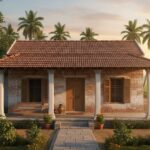
by There’s something deeply comforting about driving through the countryside and seeing homes that tell stories – homes with terracotta roofs catching the evening sun, brick walls weathered beautifully over time, and verandas where families gather after a long day.
I’ve spent years designing homes across continents, but my heart always returns to the simplicity and warmth of Indian village homes.
These aren’t just structures; they’re reflections of culture, climate, and community living.
What fascinates me most is how rural home design is evolving in 2025. Families building their dream homes in villages today want something different – they’re looking for designs that honor their roots while embracing modern conveniences.
They want homes that don’t just look good in village single floor home front design photos but actually work for their lifestyle.
Whether it’s a middle-class family planning a modest home or someone wanting a modern farmhouse aesthetic, the front elevation sets the entire tone.
It’s the first impression, the architectural handshake that welcomes guests and reflects the family’s personality.
The beauty of single-floor village homes lies in their practicality. No stairs to climb as you age, easier maintenance, and a beautiful connection with the surrounding landscape.
But creating that perfect front design requires understanding materials, regional climate, cultural preferences, and yes—budget realities.
From my decade-long experience working with diverse clients, I’ve learned that the best designs balance aesthetics with functionality, tradition with innovation.
Let me walk you through ten distinctive design approaches that are transforming village homes across India this year.
Village Single Floor Home Front Design
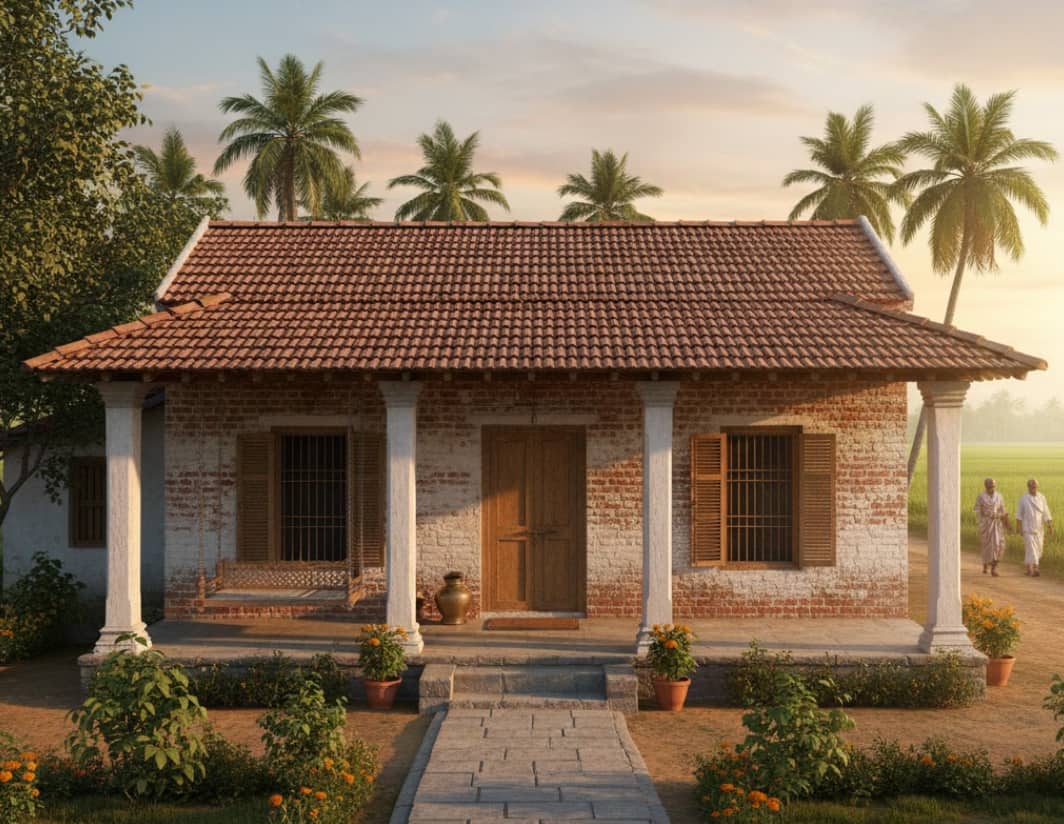
The front elevation of a village home is more than just an exterior wall with doors and windows—it’s an architectural statement that bridges past and present.
In rural India, where homes are often built on family land passed down through generations, the design carries emotional weight. It needs to respect tradition while accommodating modern living standards.
What makes village home front designs unique is their relationship with the environment. Unlike urban homes squeezed between concrete neighbors, village homes breathe.
They have space for verandas, courtyards, and gardens. The materials chosen often reflect what’s locally available—brick from nearby kilns, stone from local quarries, wood from regional forests. This creates an authentic connection between the home and its landscape.
The importance of thoughtful front design cannot be overstated. It affects natural light penetration, ventilation patterns, energy efficiency, and even the home’s resale value.
A well-designed front elevation can make a modest home look distinguished, while poor design choices can diminish even an expensive construction.
As someone who’s worked on both simple village single floor home front design projects and elaborate ones, I can tell you that success lies in understanding your family’s needs, the local climate, and the architectural language of your region.
1. Brick-Inserted Village Home Design
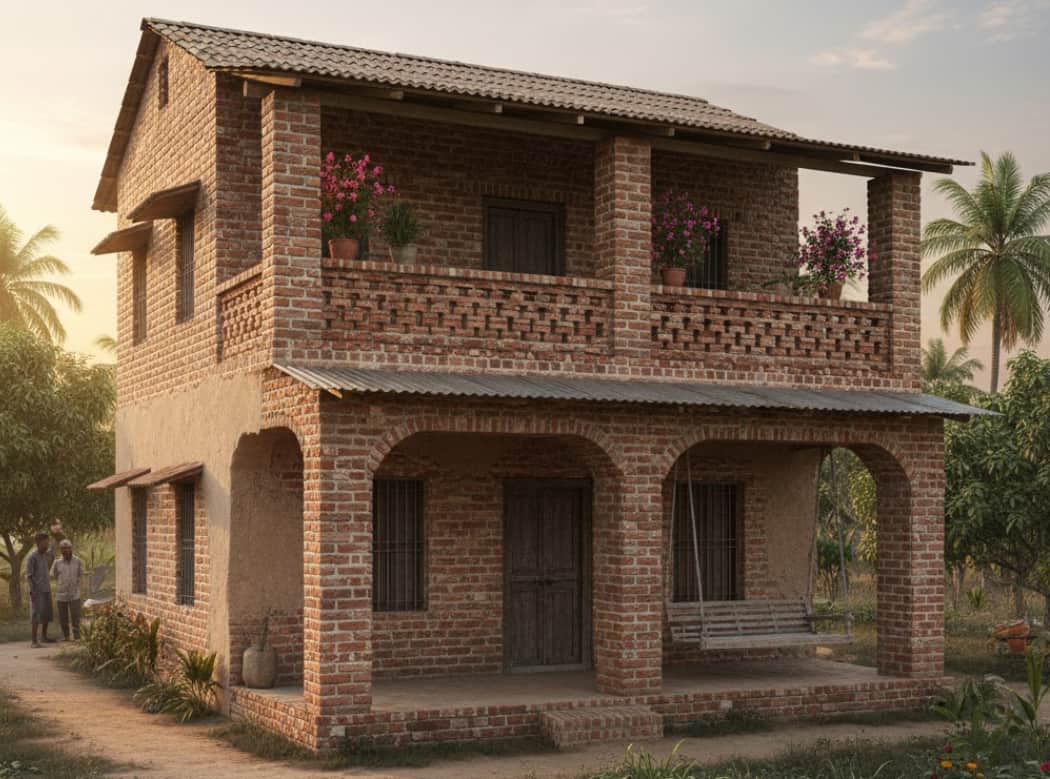
There’s an earthy authenticity to exposed brick that instantly feels like home. When I designed a farmhouse outside Pune using traditional red brick, the client’s first reaction was emotional—it reminded him of his grandfather’s home. That’s the power of brick.
Brick-inserted designs work beautifully in village settings because they blend seamlessly with natural surroundings. The reddish-brown tones complement gardens, trees, and even the red soil common in many Indian villages. Unlike painted surfaces that need refreshing every few years, brick develops character over time. The rough texture creates visual interest, catching light differently throughout the day.
What makes this approach particularly smart for the middle class village single floor home front design is its cost-effectiveness. Local bricks are affordable, readily available, and require minimal finishing. You can leave sections exposed while plastering others, creating interesting textural contrasts. Pair brick walls with wooden doors and windows, add some climbing bougainvillea, and you’ve got a home that looks both rustic and refined.
Design tip: Use decorative brick patterns around the entrance—herringbone or basket weave layouts add sophistication without additional cost. Consider contrasting mortar colors to highlight the brick pattern.
2. Pillared Front Elevation Design
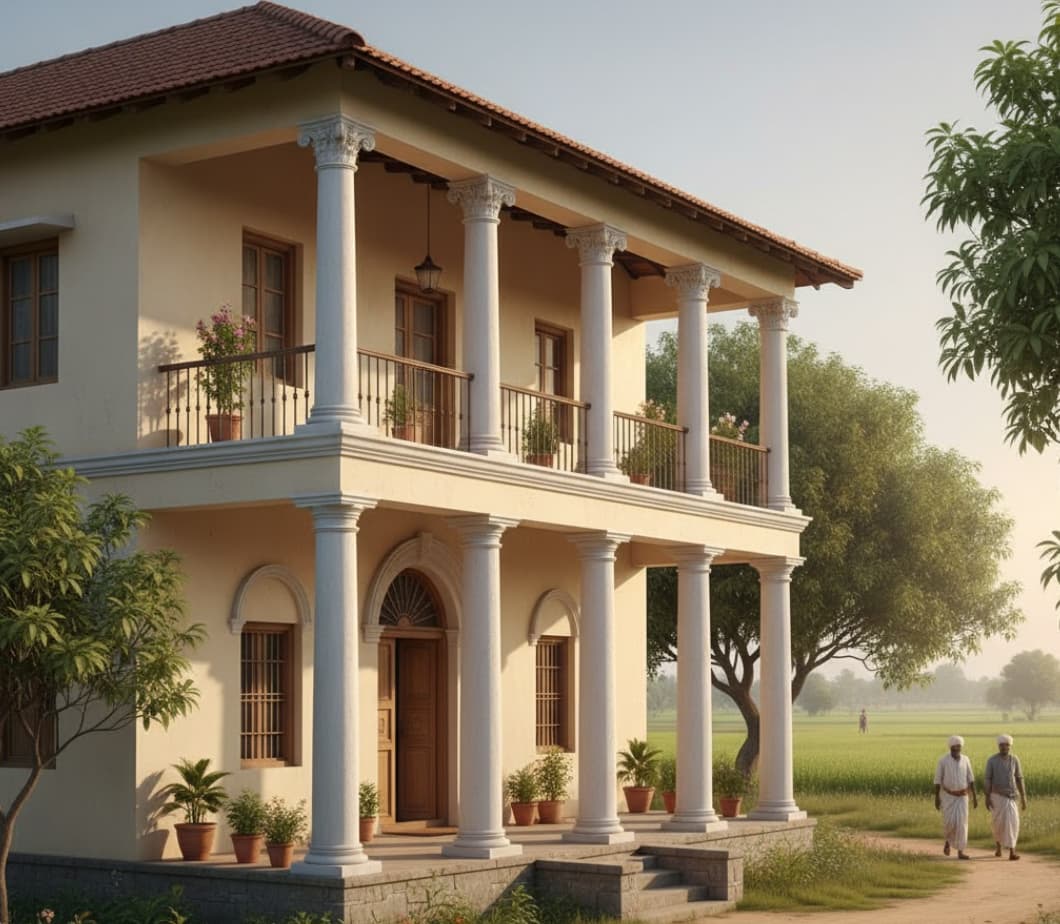
Pillars transform a simple front into something architecturally significant. I’ve used this approach extensively because pillars serve dual purposes—they’re structural elements that also create rhythm and grandeur. When you approach a home with well-proportioned pillars flanking the entrance or supporting a veranda roof, there’s an immediate sense of welcome and elegance.
In traditional Indian village architecture, pillars often feature intricate carvings and details that reflect regional craftsmanship. You don’t need elaborate designs, though—even simple cylindrical or square pillars painted in contrasting colors can dramatically improve your home’s appeal. The key is proportion. Pillars should feel substantial without overwhelming the facade.
This design works particularly well for homes with covered verandas, which are essential in rural areas for social interaction and weather protection. The space between pillars creates a semi-outdoor room—perfect for morning chai or evening conversations. Materials can range from reinforced concrete (most economical) to natural stone (premium but stunning) or even wood in regions where it’s abundant.
Design tip: Paint pillar bases in darker tones (deep terracotta, brown, or grey) and keep the upper portions lighter. This grounds the structure visually and hides dirt accumulation near the ground.
3. Low-Budget Village Home Front Design
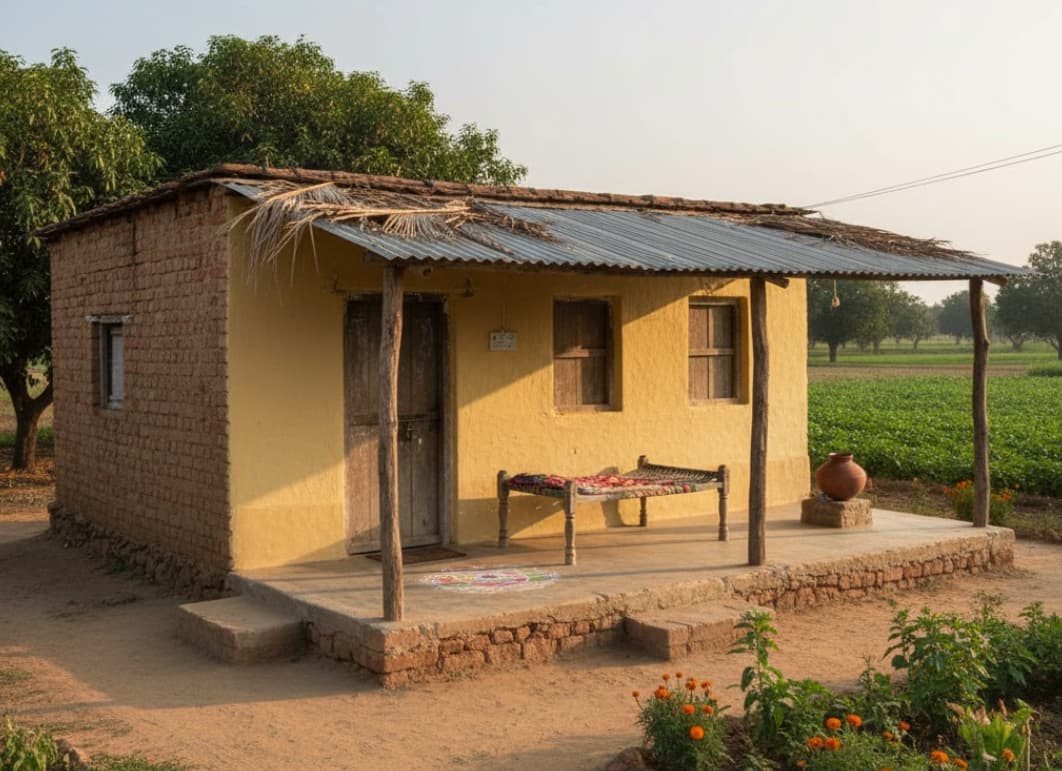
Budget constraints shouldn’t mean compromising on beauty—they just require smarter choices. I’ve designed numerous village house low low-budget village single-floor home front design projects where the results looked far more expensive than the actual investment.
The secret lies in material selection and strategic splurging. Use affordable materials like concrete blocks or brick for main walls, but invest in a few standout elements—perhaps quality paint in appealing colors, attractive main door hardware, or decorative jali work around windows. Clay tiles for roofing provide excellent insulation and classic village aesthetics at a reasonable cost. Metal sheet roofing, when chosen in terracotta or earthy colors rather than plain aluminum, can look quite sophisticated.
Maximize space utilization by designing multipurpose areas. A veranda can serve as a parking space during monsoons and a seating space during festivals. Simple geometric patterns created with different paint colors or affordable tiles cost little but add significant visual interest. Even basic homes look polished when the front elevation has clean lines, good proportions, and thoughtful color choices.
Design tip: Focus budget on the entrance area—the first five feet that visitors see most closely. Invest in quality finishing here, even if other areas use simpler materials. This creates a strong first impression.
4. Farmhouse-Style Village Design
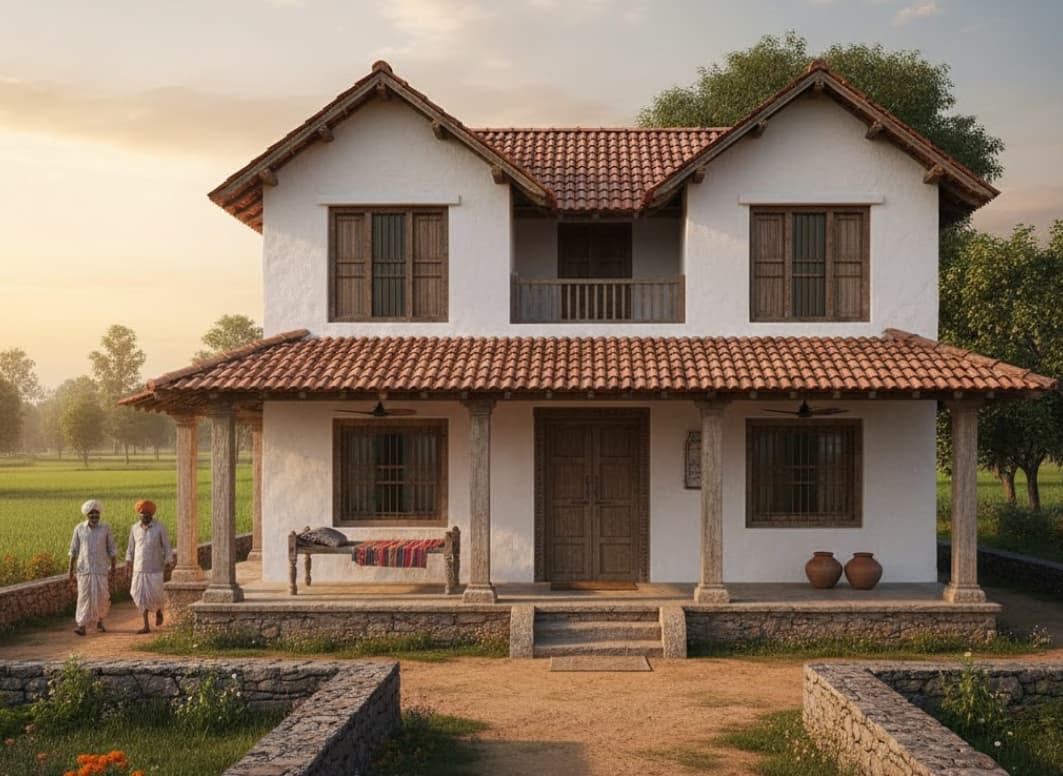
The modern farmhouse aesthetic brilliantly merges rural charm with contemporary conveniences, and it’s gaining tremendous popularity in Indian villages. Having designed several farmhouse-type homes, I love how this style celebrates the connection between indoor and outdoor spaces.
Large windows are the hallmark of this design—they frame views of surrounding fields or gardens while flooding interiors with natural light. French windows or sliding glass doors create easy access to front gardens or verandas. The facade typically features mixed materials: perhaps stone on the base, plastered upper walls, and exposed wooden beams or rafters. Metal roofing in dark colors adds a modern edge while remaining practical.
This approach suits families who want village living without feeling isolated from modern life. You can incorporate contemporary elements like large glass panels while retaining traditional features like a covered sit-out or decorative pillars. The result feels fresh yet rooted.
Design tip: Use horizontal siding or wood-look panels on sections of the facade to enhance the farmhouse feel. Add exterior lighting fixtures with vintage styling—they’re affordable but dramatically improve evening curb appeal.
5. Stone-Clad Front Elevation
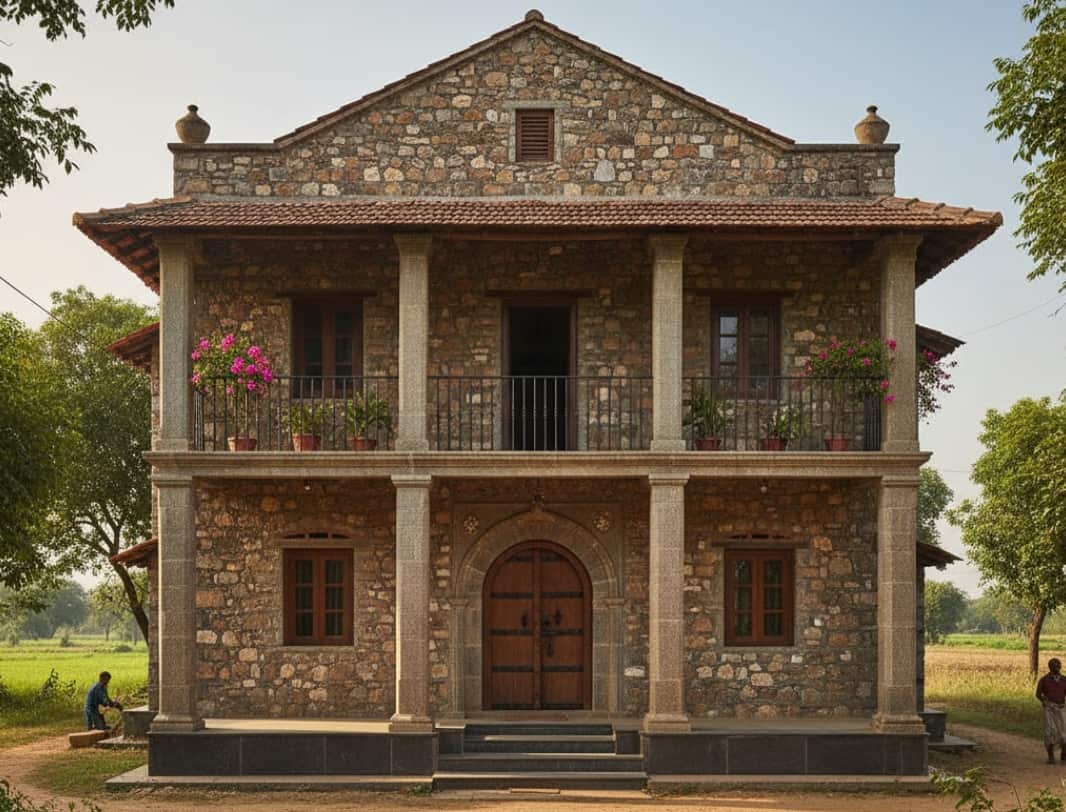
Stone brings instant gravitas to any structure. When I specify stone cladding for village homes, it’s not just about aesthetics—though stone undeniably looks magnificent—it’s also about durability and minimal maintenance. Stone weathers beautifully, developing patina rather than deteriorating.
Various stone types suit different budgets and regional availability. Natural river rocks create a rugged, organic appearance perfect for homes in hilly or forested areas. Cut stone in regular patterns offers more formal elegance suitable for prominent village homes. Even manufactured stone veneers, which cost significantly less than natural stone, provide excellent visual impact.
The textured surface of stone catches light beautifully, creating depth and shadow play that changes throughout the day. This natural variation means your home’s appearance evolves with the sun’s movement—something flat painted surfaces can’t achieve. Stone also provides excellent insulation, keeping interiors cooler in summer and warmer in winter.
Design tip: Use stone strategically rather than covering entire facades—accent walls, entrance surrounds, or pillar cladding create focal points without budget overruns. Combine stone with smooth plastered sections for a pleasing contrast.
6. Spacious Veranda Design
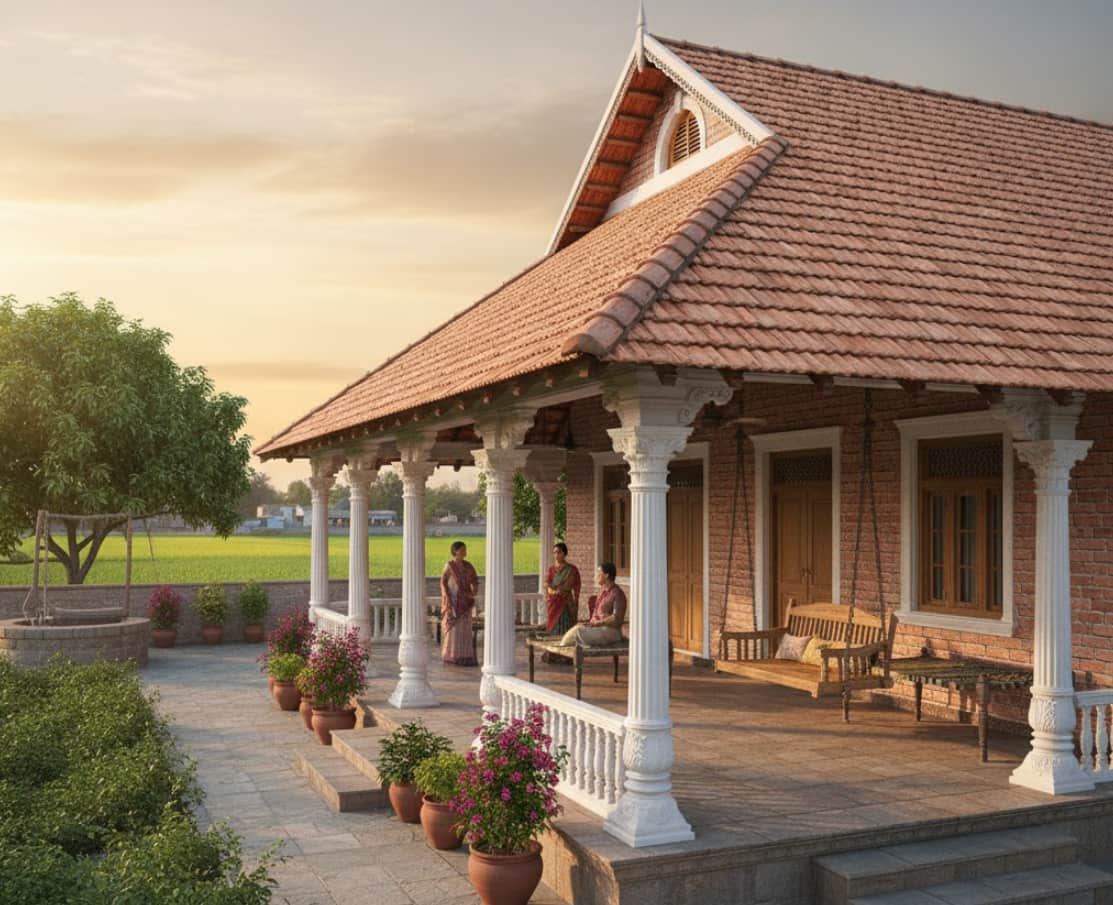
The veranda is the soul of village living—where social life happens, where you watch monsoons arrive, where children play while you keep watch. A spacious veranda front design isn’t just traditional; it’s deeply practical for the Indian climate and culture.
Traditional village homes typically feature verandas spanning the entire front width, supported by decorative pillars with clay tile or metal sheet roofing extending forward. This creates a covered outdoor room that remains usable year-round. During summer, it provides shade while allowing breezes. In monsoons, you enjoy the rain without getting wet. In winter, it’s sun-soaked and warm.
Modern interpretations maintain the space but update the aesthetics. You might use reinforced concrete beams instead of wood, add ceiling fans for comfort, or incorporate built-in seating. The entrance becomes more than a door—it’s an invitation to pause and connect. I always recommend making verandas at least 6-8 feet deep; anything less feels cramped and defeats the purpose.
Design tip: Add decorative elements that enhance without cluttering—perhaps carved wooden brackets supporting the roof edge, colorful ceramic pots with plants, or traditional jhoola swings. These personalize the space and celebrate regional craftsmanship.
7. Tile-Applied Front Elevation
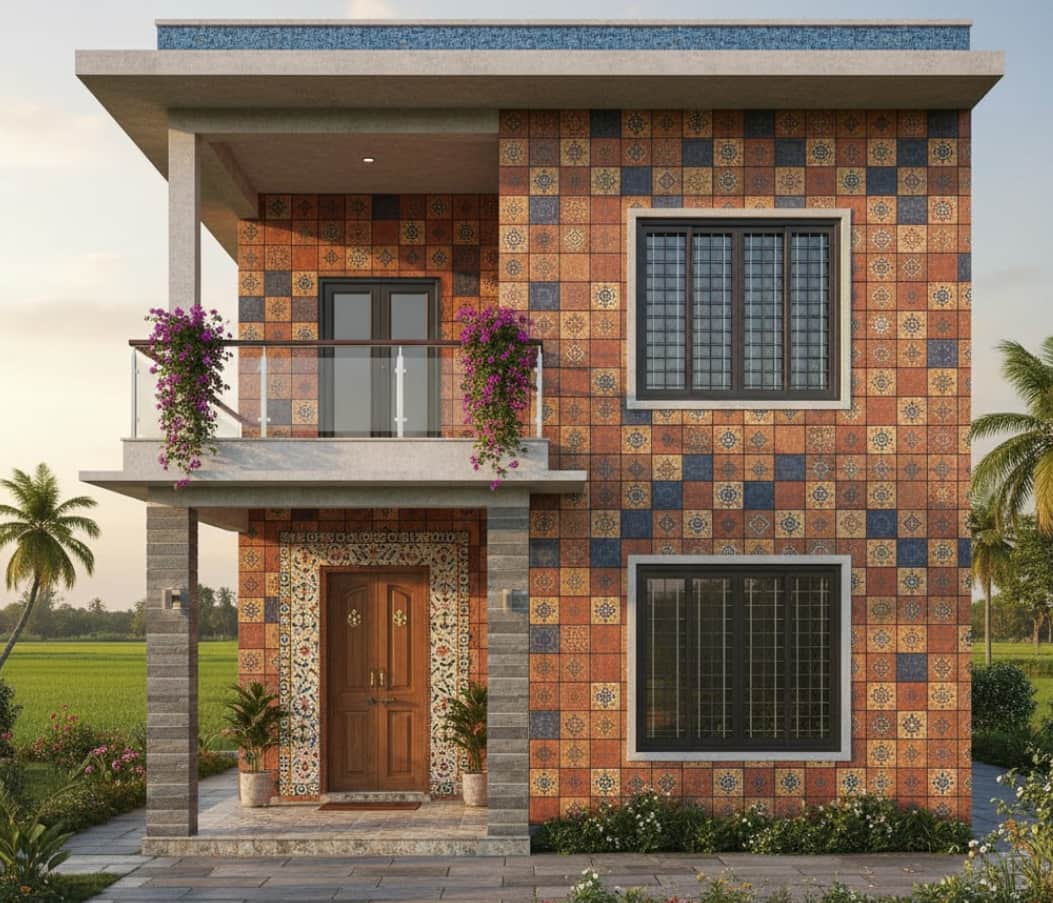
Elevation tiles have revolutionized the village single floor home front design in recent years.
The variety available today is stunning—from natural stone looks to wood textures, from traditional terracotta patterns to contemporary geometric designs. Tiles transform ordinary walls into architectural features.
What makes tiles particularly appealing for village homes is the combination of beauty and practicality.
Unlike paint that fades and requires regular maintenance, quality tiles retain their appearance for decades.
They’re easy to clean—just occasional washing keeps them looking fresh. Modern tiles are also extremely durable, resisting weather, moisture, and temperature variations.
The application process is straightforward, making it accessible even in rural areas where specialized labor might be limited.
You can cover entire facades or create accent areas—perhaps tiles around the entrance, on pillar surfaces, or as decorative bands breaking up large wall expanses.
The visual impact is immediate and sophisticated, elevating even simple home designs into something special.
Design tip: Choose tiles with texture and dimension rather than flat surfaces—this creates more interesting light play.
Consider mixing two complementary tile styles for visual interest without looking busy.
8. Flat Roof Modern Village Home
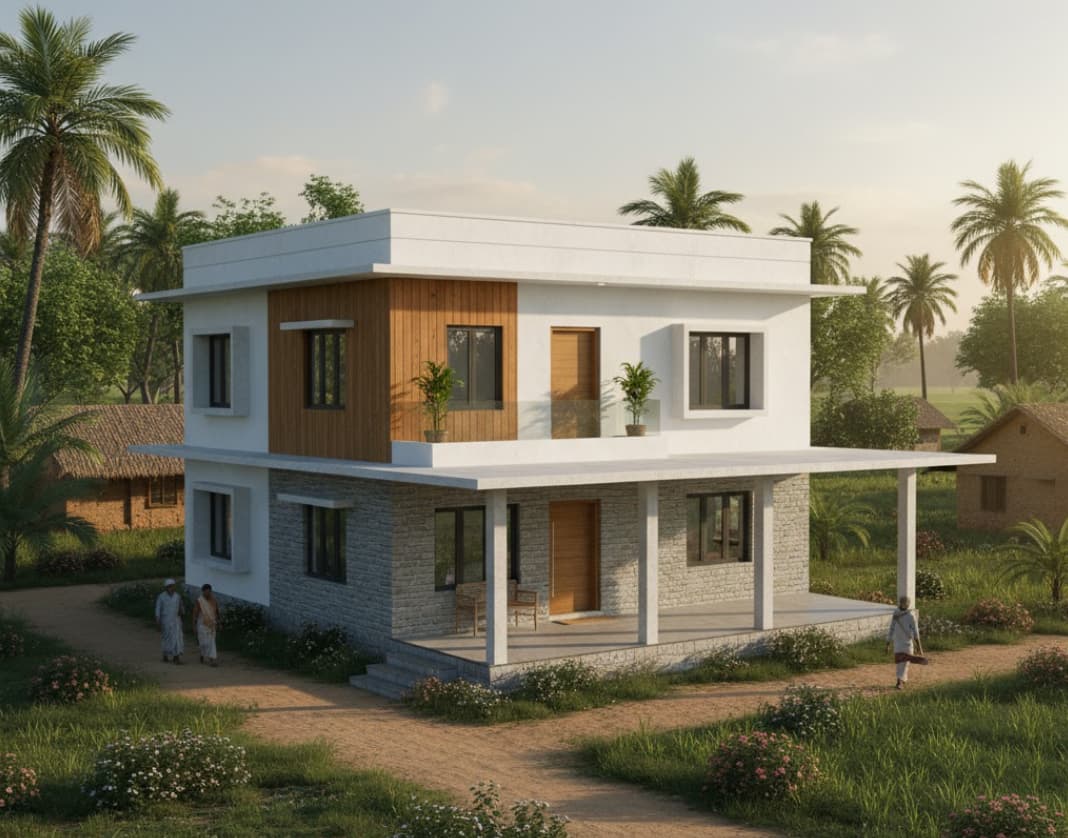
Flat roof designs bring contemporary minimalism to village settings, and I’ve noticed increasing interest in this style among younger families building homes on ancestral land.
The clean horizontal lines, simple geometry, and uncluttered appearance feel refreshingly modern while remaining practical.
Contrary to myths, flat roofs work perfectly well in Indian villages when properly designed with adequate drainage and waterproofing.
The construction is often simpler and faster than pitched roofs, making it economical. The roofline’s simplicity allows other design elements—interesting window patterns, textured walls, colorful accents—to stand out more.
This style suits those wanting their modern village single floor home front design to reflect contemporary sensibilities.
It pairs beautifully with large glass panels, minimalist entrances, and geometric landscaping. The flat roof itself becomes usable space—perfect for solar panels, terrace gardens, or even future expansion if designed with adequate structural strength.
Design tip: Balance the flat roof’s horizontality with vertical elements—tall planters, vertical cladding sections, or prominent entrance features. This prevents the design from feeling too low and sprawling.
9. Indian-Style Regional Design
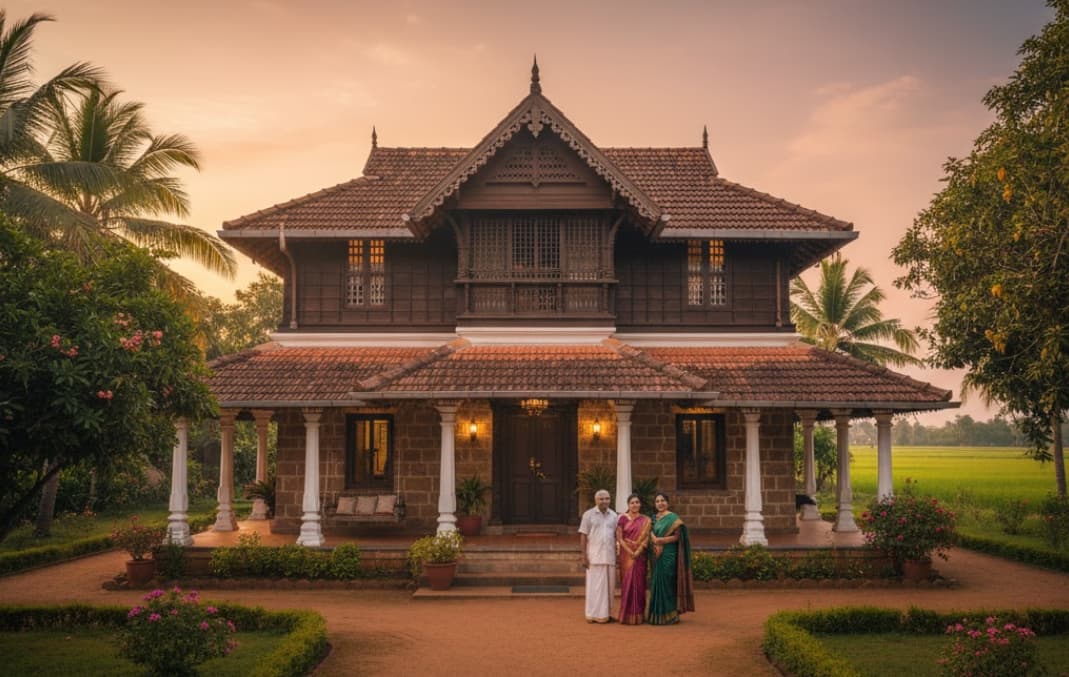
India’s architectural diversity is extraordinary—what works in Kerala differs dramatically from Rajasthan, which differs from Bengal.
Embracing your region’s traditional village single floor home front design, Indian style, creates homes that feel authentic and contextually appropriate.
In South India, this might mean sloping clay tile roofs with deep overhangs, carved wooden pillars, and courtyards bringing light into the center.
Rajasthan’s villages feature jharokhas (overhanging enclosed balconies), jali work for privacy with ventilation, and vibrant colors – deep reds, yellows, blues—reflecting the desert’s energy.
Bengali village homes traditionally incorporate terracotta plaques with intricate designs.
When I work on regionally inspired designs, I study traditional elements but interpret them for modern living.
You might use traditional jali patterns but in contemporary materials, or incorporate carved wooden elements around a modern glass door.
The goal is to create something that feels rooted in place and heritage without seeming like a museum piece.
Design tip: Research your region’s traditional color palettes—these evolved based on locally available materials and actually suit the local light and landscape better than imported color schemes. Use these as your starting point.
10. Smart Material Selection for Longevity
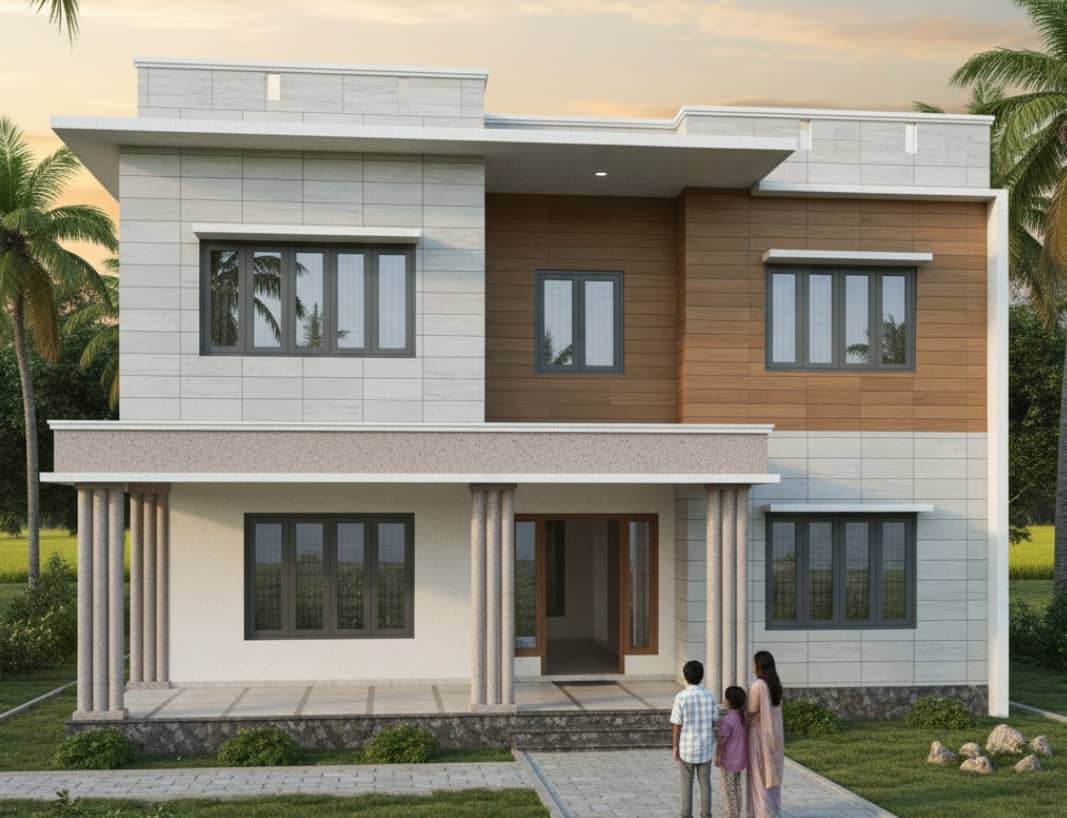
The materials you choose ultimately determine your home’s longevity, maintenance requirements, and how it ages.
Having specified materials for projects across varying climates and budgets, I’ve learned what truly works for village homes.
Wood brings unmatched warmth and beauty but requires commitment to maintenance, especially in humid or termite-prone areas.
Use it selectively—perhaps for doors, window frames, or decorative elements—rather than extensively unless you’re prepared for upkeep.
- Brick and stone are village home champions—durable, naturally insulating, regionally appropriate, and aging beautifully. Their initial cost is moderate, and long-term maintenance is minimal. They work across India’s diverse climates.
- Concrete offers design flexibility and strength. Modern finishes and textures make it far more attractive than traditional gray slabs. It’s particularly good for structural elements and works well when combined with other materials for facades.
- Composite materials represent the future—they offer wood or stone aesthetics with superior durability and minimal maintenance. While currently more expensive, their lifecycle costs often prove economical.
- Design tip: Mix materials strategically rather than using one throughout. Perhaps brick for main walls, stone accenting the entrance, wood for doors, and concrete for structural elements. This creates visual interest while optimizing each material’s strengths.
Bringing Your Village Home Vision to Life
Creating the perfect village single floor home front design isn’t about following trends blindly or spending extravagantly; it’s about understanding what makes your family unique, what your land offers, and how design can enhance daily living while honoring your roots.
The homes I’m proudest of aren’t necessarily the most expensive ones I’ve designed.
They’re the ones where families feel deeply connected to their space, where the design makes sense for their lifestyle, and where traditional values coexist comfortably with modern conveniences.
A simple brick home with thoughtful proportions and a welcoming veranda often brings more satisfaction than an elaborate design that doesn’t suit its context.
As you plan your village home in 2025, remember that your front elevation is more than architecture—it’s your family’s face to the world. It should reflect who you are, respect where you come from, and support how you want to live.
Whether you choose rustic brick, elegant stone, modern flat roofs, or traditional pillared designs, make sure it feels authentically yours.
The beauty of the village single floor home front design lies in its honesty and connection to the place. Use local materials when possible—this supports regional economies and ensures your home belongs to its landscape.
Invest in quality where it matters most—good foundations, proper waterproofing, durable doors, and windows. These aren’t visible glamour elements, but they determine whether your home becomes a legacy or a maintenance burden.
Most importantly, don’t rush the design process. Visit homes you admire, talk with experienced builders in your area, consider how seasons affect your location, and imagine daily life in your new home.
The few extra weeks spent refining your design will be rewarded with decades of satisfaction. Your village home should be a place where roots deepen, memories accumulate, and family gathers—let its front elevation announce that warmth to everyone who passes by.